Digitalosophy

An Italian Perspective on Our Digital Age

A personal map of the digital life we are already living, written from Italy for an international audience. Forthcoming 2026.

A philosophy for the digital age

Digitalosophy is a way of thinking about technology that begins with human judgment, responsibility, and awareness. It looks at digital life as a human ecosystem shaped by tools, habits, attention, trust, reputation, work, relationships, and everyday behavior.

In 2025, Gabriele Gobbo gave the word its first systematic definition, as the English-language evolution of his Italian work on digital culture, Digitalogia. The premise is simple: the digital age needs a philosophical framework alongside technical solutions.

Digitalosophy asks what technology demands from us, who benefits from our habits, and what remains human when digital systems shape attention, reputation, work, relationships, and everyday behavior.
The term

Digitalosophy

/ˌdɪdʒ.ɪ.təlˈɒs.ə.fi/

From digital + philosophy (Greek φιλοσοφία). English evolution of the Italian term Digitalogia, coined by Gabriele Gobbo.

Full definition →

Digitalosophy

An Italian Perspective on Our Digital Age

A personal map of the digital life we are already living: social media, websites, online reputation, cybersecurity, children and screens, notifications, platforms, and the fragile spaces we rent online.

Written from Italy for an international audience, Digitalosophy looks at technology as a human ecosystem: tools, habits, attention, trust, reputation, families, work, and everyday behavior.

Foreword by Marco Camisani Calzolari, NYC-based Internet Pioneer and Strategic Digital Advisor.
ISBN 979-8285280132
Pages 170
Format Hardcover
Status Forthcoming 2026
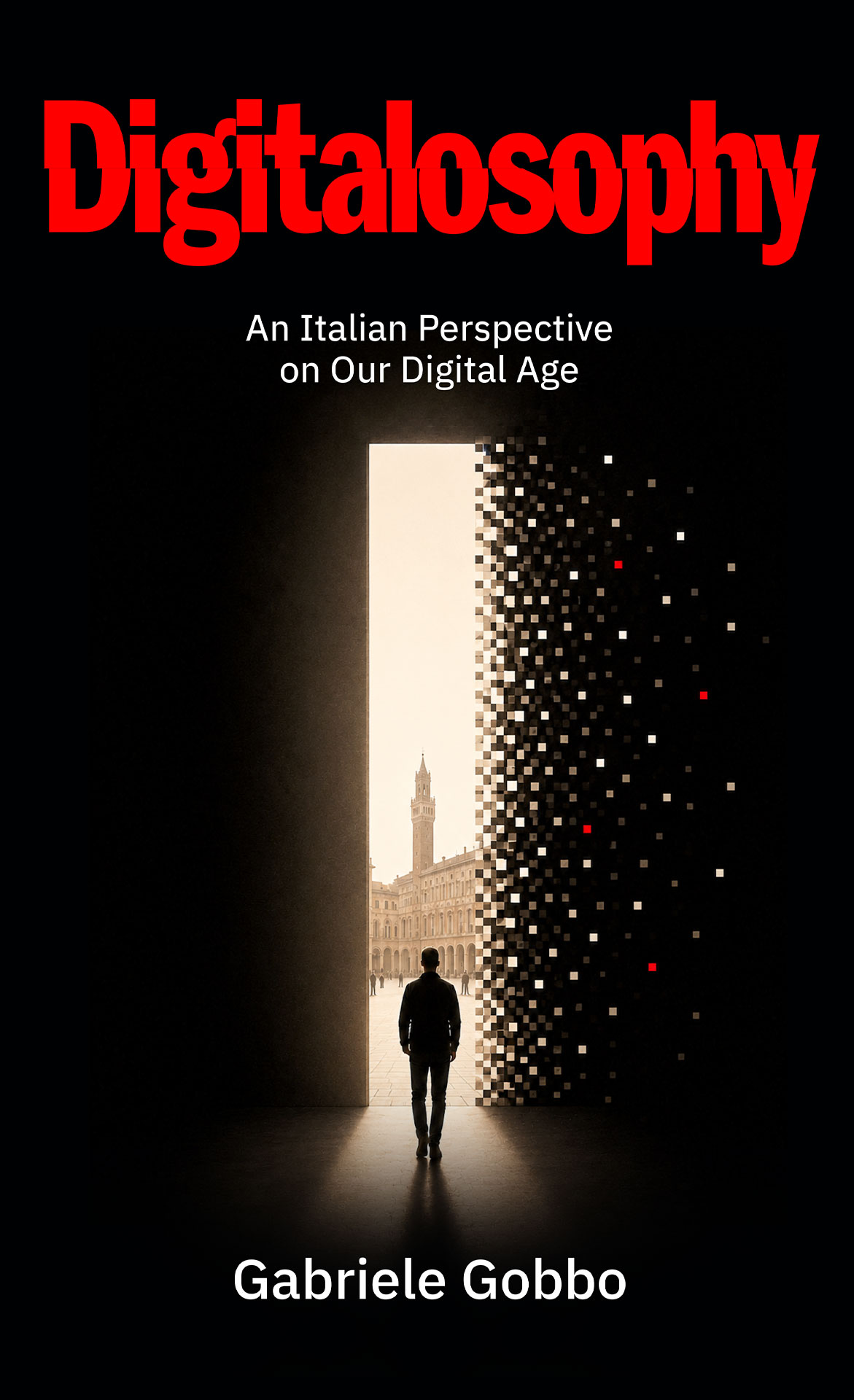
Cover of Digitalosophy: An Italian Perspective on Our Digital Age by Gabriele Gobbo

Why Italy

Italy didn't build the internet. It didn't fund the platforms, write the algorithms, or coin the term "disruption." What it did was watch all of this arrive, from a distance, with a different set of questions.

That distance is the point. Digitalosophy doesn't come from inside the conversation. It comes from a place where technology has always had to justify itself to culture, not the other way around.

The Italian perspective works as distance: a way to see what becomes invisible when technology is treated as destiny.

Thirty years of watching this arrive from a different angle.

Gabriele Gobbo

Gabriele Gobbo has spent thirty years watching digital culture grow from a curiosity into the infrastructure of everyday life. He was there for most of it: the first websites, the early communities, the moment social media stopped being fun, the arrival of AI as something everyone suddenly had an opinion about.

He is the creator of Digitalosophy and the author of books on digital culture, AI, and technology education. His work includes the concepts of Digital Sleepwalkers and Social Zombing (co-created with Max Guadagnoli), and the development of Strategic Metaprompting and the 3C Protocol for directing generative AI without outsourcing the thinking.

He is a guest lecturer in Cyber-Humanities at Università Vita-Salute San Raffaele in Milan, directs the PioneerAIO research lab, and hosts FvgTech, a weekly television program on digital culture. He is Vice President of the Digital Security Festival. He founded Italiamac in 1996, Italy's largest Apple community.

Author page →
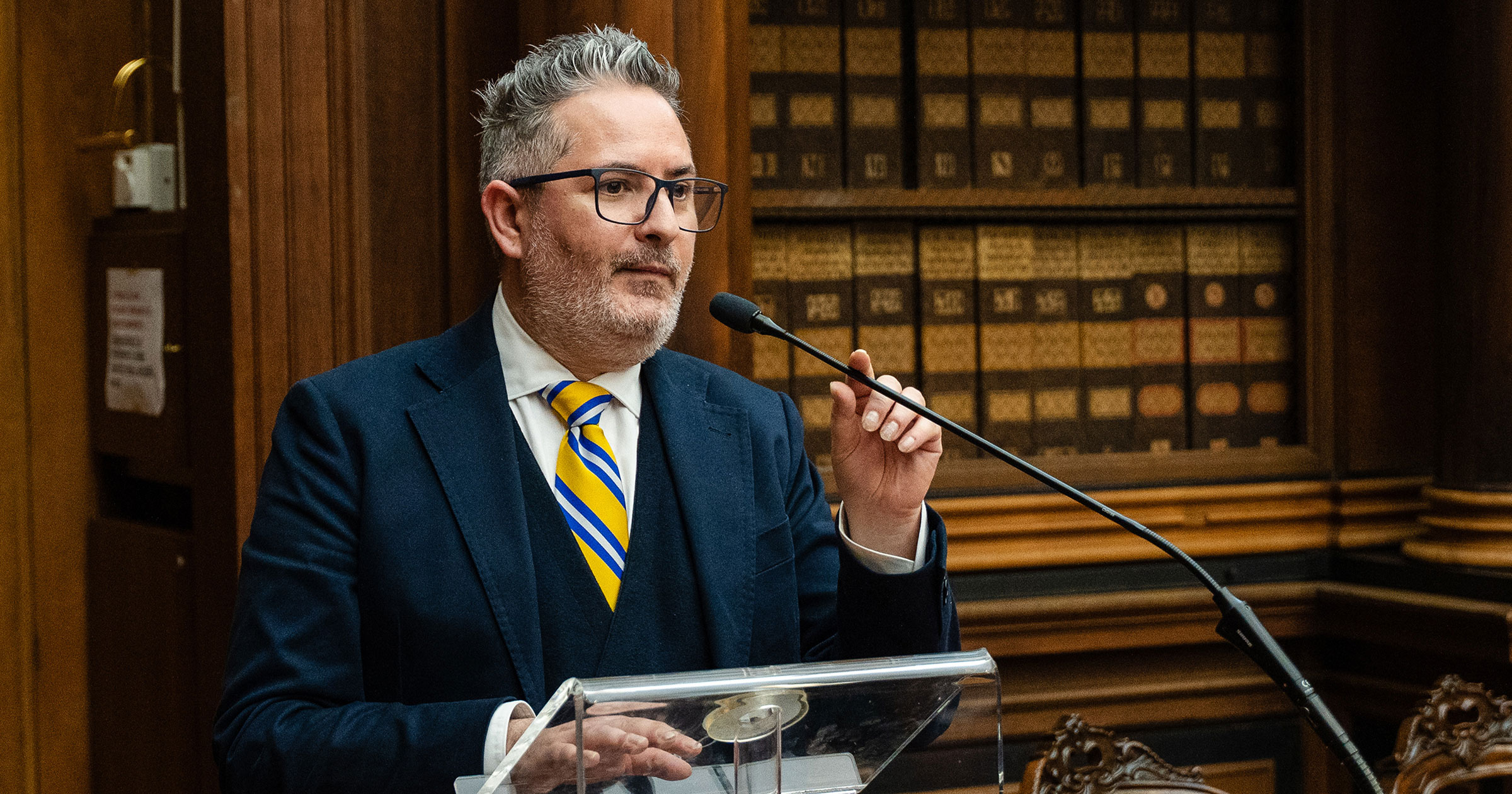
Gabriele Gobbo, Digitalosopher and author
Selected credentials

Thirty years in digital culture

Creator of Digitalosophy

Guest Lecturer, Cyber-Humanities, UniSR Milan

Host, FvgTech, weekly television program on digital culture

Founder, Italiamac, Italy's largest Apple community

Vice President, Digital Security Festival